Designing VIIZR’s Multi-Day Mobile Experience
From customer insights to a more flexible scheduling experience for field technicians.
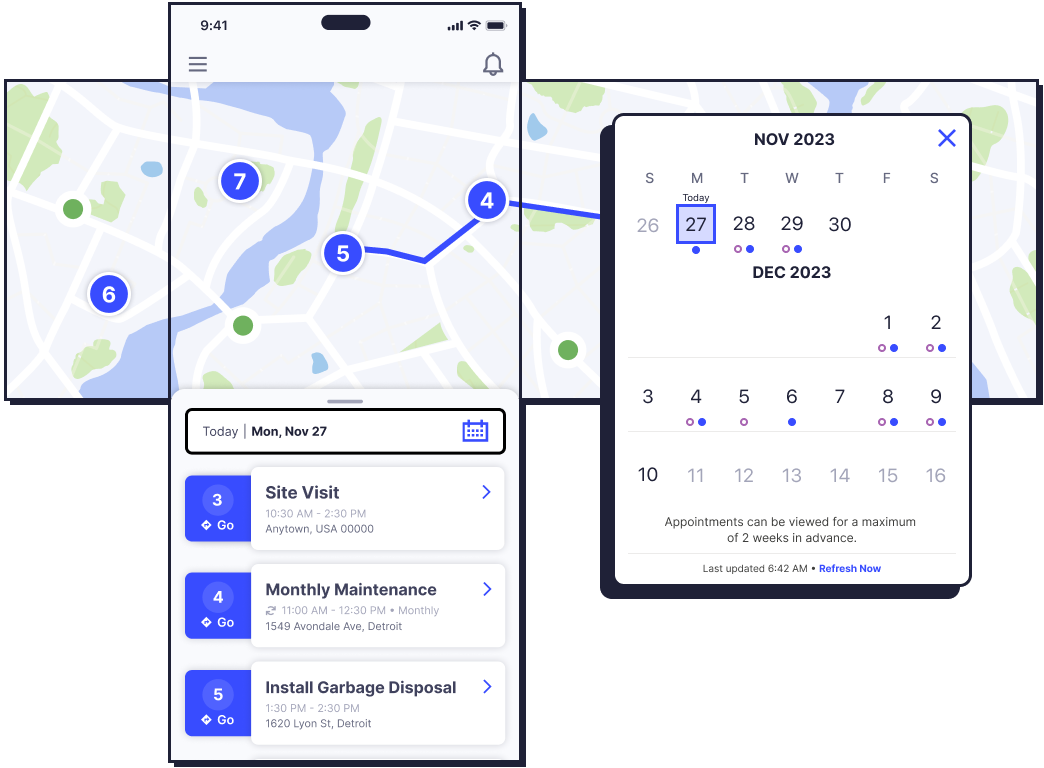
From customer insights to a more flexible scheduling experience for field technicians.
VIIZR was a field service management platform powered by Ford Pro and built on Salesforce, helping businesses in the trades manage scheduling, work orders, invoices, payments, and other day-to-day operations.
While the desktop platform supported the broader business, the VIIZR mobile app was designed primarily for technicians working in the field.
There was one major limitation: technicians could only see today's schedule.
I was tasked with designing a new multi-day experience that would allow technicians to see what's coming next without adding unnecessary complexity to an app designed for people constantly on the move.
The VIIZR mobile app gave technicians quick access to their daily appointments and work orders while they were in the field.
But once they wanted to look beyond the current day, the experience stopped.
Customer feedback repeatedly surfaced the same need: technicians wanted visibility into upcoming appointments.
For field service teams, knowing what's ahead can make it easier to prepare for upcoming jobs, understand workload, and coordinate their schedule.
The request quickly became a priority on our product roadmap.
But adding another date wasn't the real design problem.
We needed to understand what technicians actually wanted to accomplish when looking ahead.

Before designing the feature, we needed to answer several questions.
How far ahead did technicians need to look?
Did they simply want to see future appointments, or did they need to interact with them?
Should future appointments be read-only?
How would technicians know they were looking at tomorrow instead of today?
And how could we introduce this functionality without making the mobile experience more complicated?
Through customer research, feedback from our customer experience team, and usability studies, we explored how technicians expected multi-day scheduling to behave.
These insights helped us move beyond the original request of "let me see future dates" and define what a useful multi-day experience actually needed to accomplish.
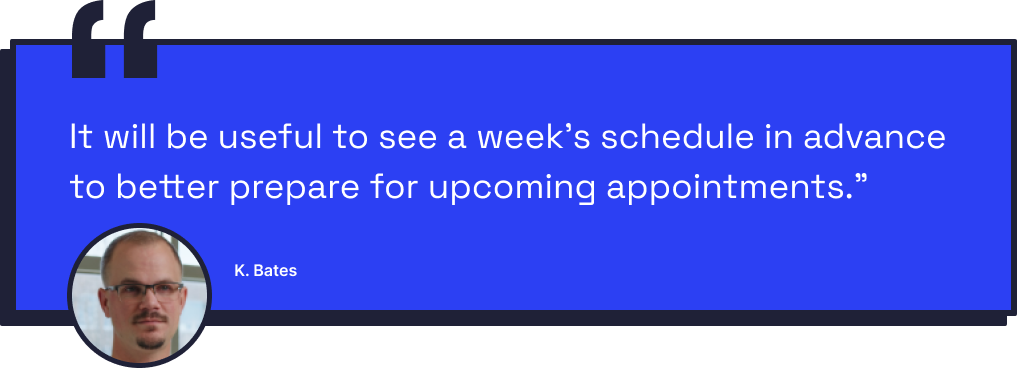
The existing mobile experience was intentionally focused.
Technicians opened the app and immediately saw the information they needed for that day's work.
We wanted to preserve that simplicity.
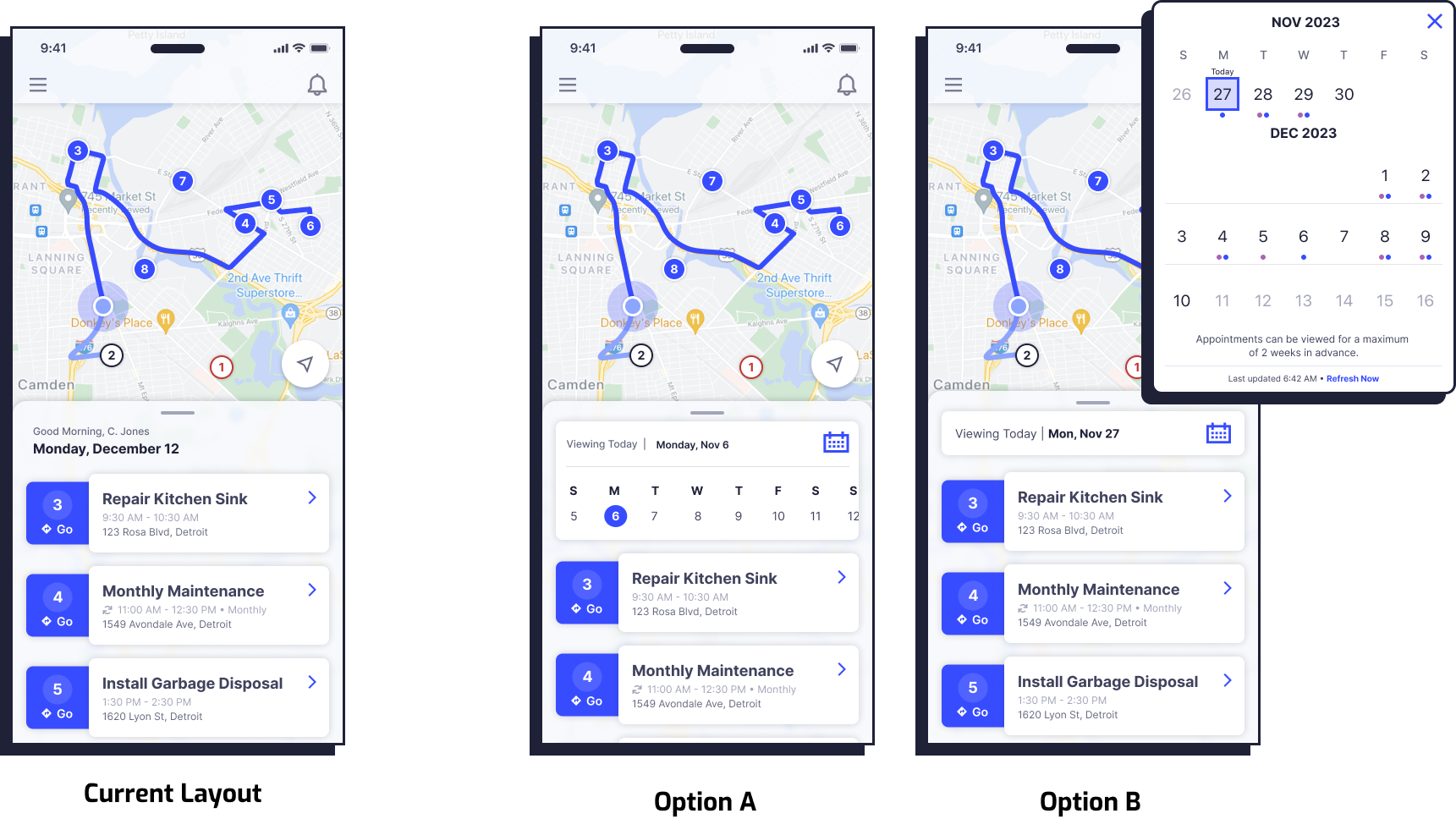
Rather than redesigning the scheduling experience around a traditional calendar, I explored ways to extend the existing workflow so technicians could move between dates naturally while maintaining the context of the day they were viewing.
The experience needed to be:
Fast — technicians should be able to move between days with minimal interaction.
Clear — the selected date needed to remain obvious throughout the experience.
Actionable — future appointments needed to provide the right level of interaction.
Accessible — the experience needed to work across users, devices, and accessibility requirements.
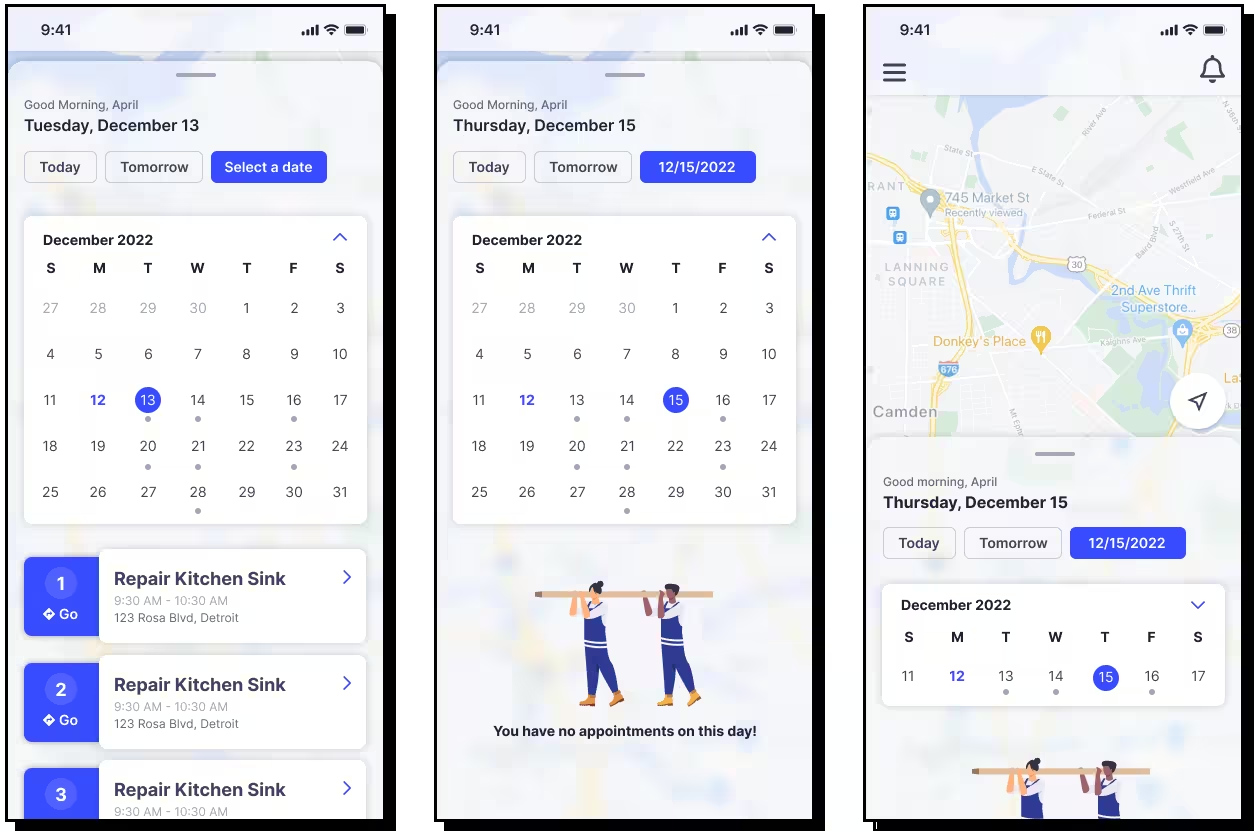
I explored multiple ways technicians could navigate between dates and brought these concepts into research sessions.
Instead of simply asking users which design they preferred, we evaluated how easily they understood each interaction, how they navigated between days, and what they expected to happen after selecting a future appointment.
We also explored an important product decision:
Should future appointments be view-only or editable?
Testing different approaches helped us understand the level of control technicians expected and identify opportunities to make future appointments useful without creating confusion with today's work.
The feedback informed several iterations and helped us narrow the experience toward a solution that felt familiar, lightweight, and easy to use in the field.
The interaction needed to feel simple to technicians, but the implementation had several layers of complexity.
Because VIIZR was built on Salesforce, the experience needed to work within its design patterns and technical constraints while also behaving consistently across Android and iOS.
I collaborated closely with engineering throughout the process to understand what was technically feasible and adapt the experience without compromising the core user need.
Accessibility was also part of the design process rather than a final check.
We tested and refined interactions to ensure navigation, hierarchy, states, and controls remained understandable and accessible across the mobile experience.
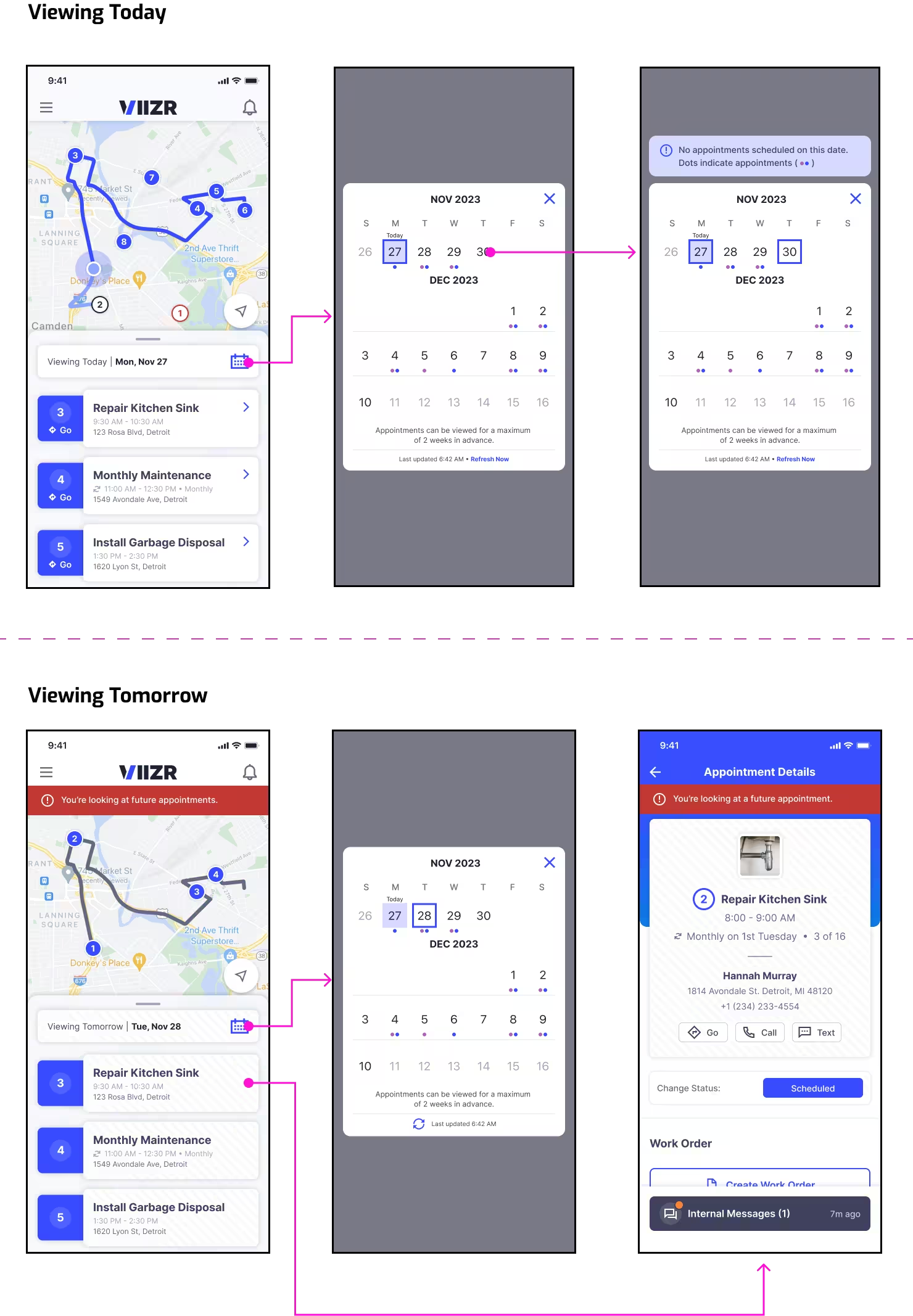
The final multi-day experience expanded the technician's schedule beyond the current day while preserving the simplicity of the original mobile app.
Technicians could quickly navigate to future dates, understand which day they were viewing, and access upcoming appointments without leaving their primary workflow.
01 — Navigate between days
Technicians could move beyond today's schedule and quickly see upcoming work.
02 — Maintain date context
The interface clearly communicated when a technician was viewing a future date, reducing the risk of confusing today's appointments with upcoming ones.
03 — View upcoming appointments
Technicians could see the jobs assigned to them for future dates and prepare for upcoming work.
04 — Take action from appointment details
The experience extended beyond the home screen into appointment details, creating consistency when technicians interacted with upcoming work.
What began as a request to "see more days" became a more complete scheduling experience.
The multi-day experience was introduced to a select group of VIIZR customers at the end of October.
The release allowed the team to observe how the feature performed within real field-service workflows and continue gathering customer feedback.
More importantly, it addressed one of the recurring limitations customers had identified in the mobile experience: technicians were no longer restricted to understanding only what was happening today.
They could start looking ahead.
My involvement extended beyond designing the feature itself.
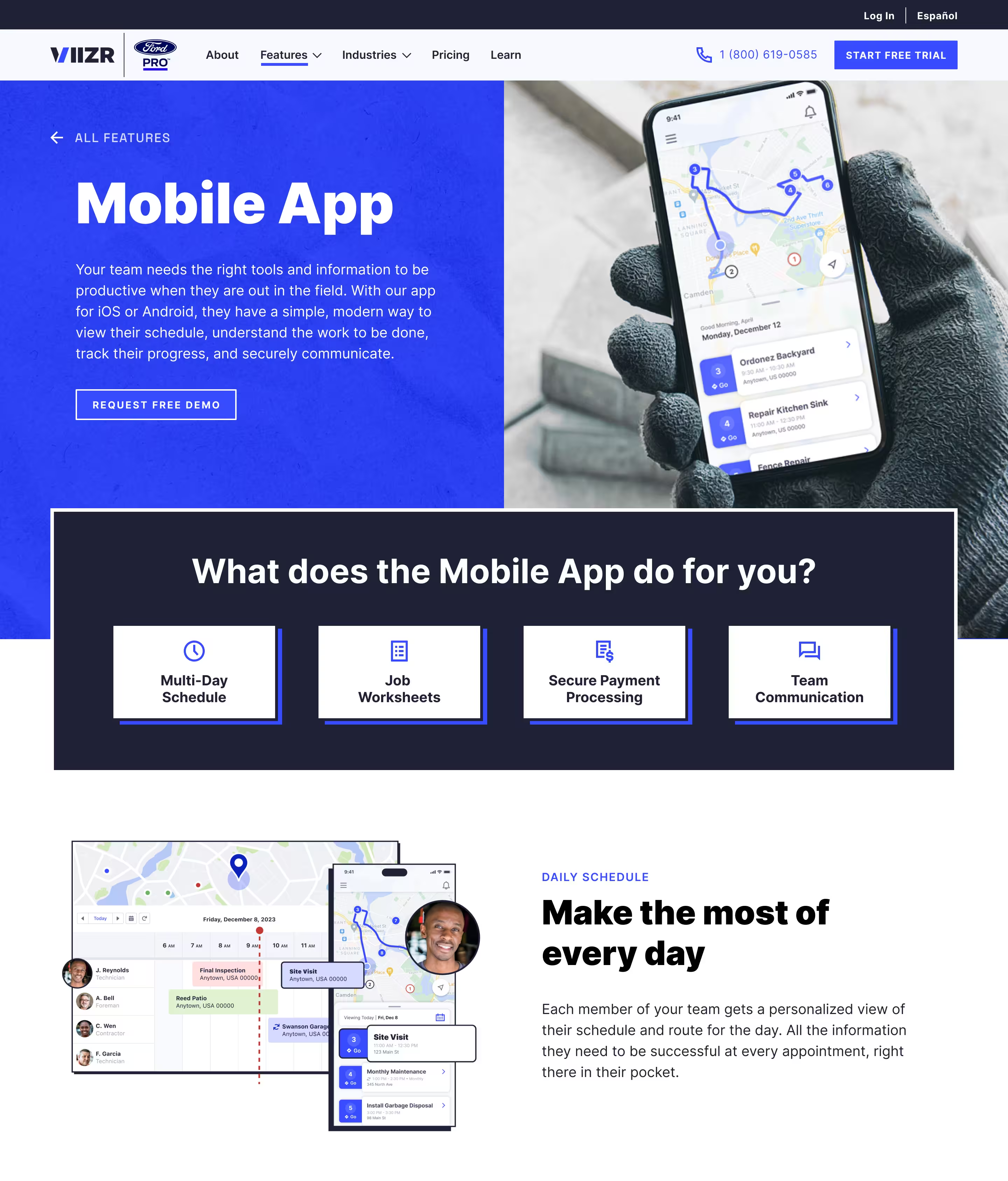
Drawing on my background across product and marketing design, I also partnered with the marketing team to help redesign the VIIZR mobile app webpage and communicate the value of features like multi-day scheduling.
I contributed throughout the process, from research and user testing to design exploration, execution, and supporting marketing assets.
This allowed me to think about the experience from two perspectives: how technicians used the feature and how we communicated its value to prospective customers.
At first, multi-day scheduling sounded like a straightforward request: allow technicians to see tomorrow's appointments.
Research revealed that the real problem was about visibility, context, and control.
Technicians didn't simply need another date on the screen. They needed to understand what was coming next without losing sight of where they were in their current workflow.
The project reinforced the importance of investigating the need behind a feature request rather than designing directly from the request itself.
By testing multiple approaches, collaborating closely with engineering, and designing within the constraints of Salesforce, iOS, and Android, we turned a seemingly small enhancement into a more flexible scheduling experience for technicians in the field.

At VIIZR, I led numerous projects, including website development and marketing campaigns in both English and Spanish. I also played a key role in rebranding VIIZR to enhance our digital presence and market positioning.
Click here to view case study.